



Complete List of Banking Exams in India
Discover the Best Banking Exams for Your Future
Yet, with lakhs of aspirants competing for thousands of seats, cracking a banking exam demands smart strategy, sustained preparation, and most critically, a thorough understanding of what each exam is about. This guide, brought to you by Sreedhar's CCE, breaks down every major banking exam in India so you know exactly what you are preparing for.
Who Conducts Banking Exams in India?
The Indian banking recruitment landscape is organized around a few key bodies:
- IBPS (Institute of Banking Personnel Selection): conducts centralized exams for most public sector banks
- SBI (State Bank of India): conducts its own independent recruitment for PO, Clerk, and specialist roles
- RBI (Reserve Bank of India): recruits for Grade B Officers and Assistants separately
- NABARD (National Bank for Agriculture and Rural Development): recruits Grade A and Grade B officers
- SIDBI (Small Industries Development Bank of India): recruits Assistant Managers
- Individual PSBs (Public Sector Banks): Bank of Baroda, Canara Bank, Punjab National Bank, etc. occasionally notify their own recruitments
- Regional Rural Banks (RRBs): staffed via IBPS RRB exams
Understanding which body conducts which exam is the first step to building an effective study plan.
Complete List of Major Banking Exams in India
Quick Reference: All Major Banking Exams at a Glance
| Exam Name | Conducting Body | Post | Eligibility | Stages |
|---|---|---|---|---|
| SBI PO | State Bank of India | Probationary Officer | Graduate, 21-30 yrs | 3 |
| SBI Clerk | State Bank of India | Junior Associate | Graduate, 20-28 yrs | 2 |
| IBPS PO | IBPS | Probationary Officer | Graduate, 20-30 yrs | 3 |
| IBPS Clerk | IBPS | Clerk | Graduate, 20-28 yrs | 2 |
| IBPS SO | IBPS | Specialist Officer | Graduate + Domain, 20-30 yrs | 3 |
| IBPS RRB PO | IBPS | Officer Scale I | Graduate, 18-30 yrs | 3 |
| IBPS RRB Clerk | IBPS | Office Assistant | Graduate, 18-28 yrs | 2 |
| RBI Grade B | Reserve Bank of India | Officer Grade B | Graduate 60%, 21-30 yrs | 3 |
| RBI Assistant | Reserve Bank of India | Assistant | Graduate, 20-28 yrs | 3 |
| NABARD Grade A | NABARD | Assistant Manager | PG/Grad, 21-30 yrs | 3 |
| NABARD Grade B | NABARD | Manager | PG/Grad, 21-35 yrs | 3 |
| SIDBI Grade A | SIDBI | Assistant Manager | Graduate 60%, 21-28 yrs | 3 |
| SBI CBO | State Bank of India | Circle-Based Officer | Graduate + 2 yrs exp. | 2 + Interview |
1. SBI PO (Probationary Officer)
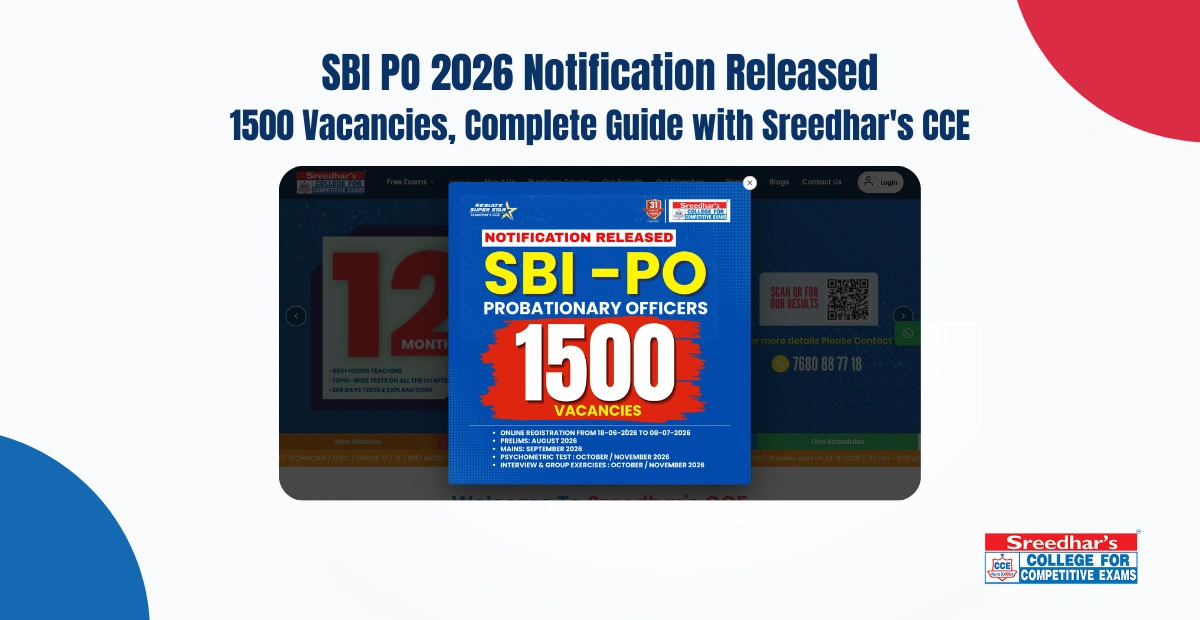
The SBI PO exam is widely regarded as the crown jewel of banking recruitments. Conducted by the State Bank of India to fill Probationary Officer vacancies across its branches nationwide, this exam carries immense prestige and offers an excellent starting salary. The SBI PO notification for 2026 is expected to be released in June 2026.
The selection process has three stages: a Preliminary exam (100 marks, 1 hour), a Mains exam that is significantly more challenging and includes a descriptive paper, and a final round comprising a Psychometric Test, Group Exercise, and Personal Interview. The final merit list is based on the combined normalized score of the Mains (75%) and the third phase (25%). The Preliminary Exam is qualifying in nature only.
Eligibility requires a graduation degree in any discipline from a recognized university. Candidates in their final year may also apply conditionally. The age limit is 21-30 years, with standard relaxation for reserved categories.
2. SBI Clerk (Junior Associate)
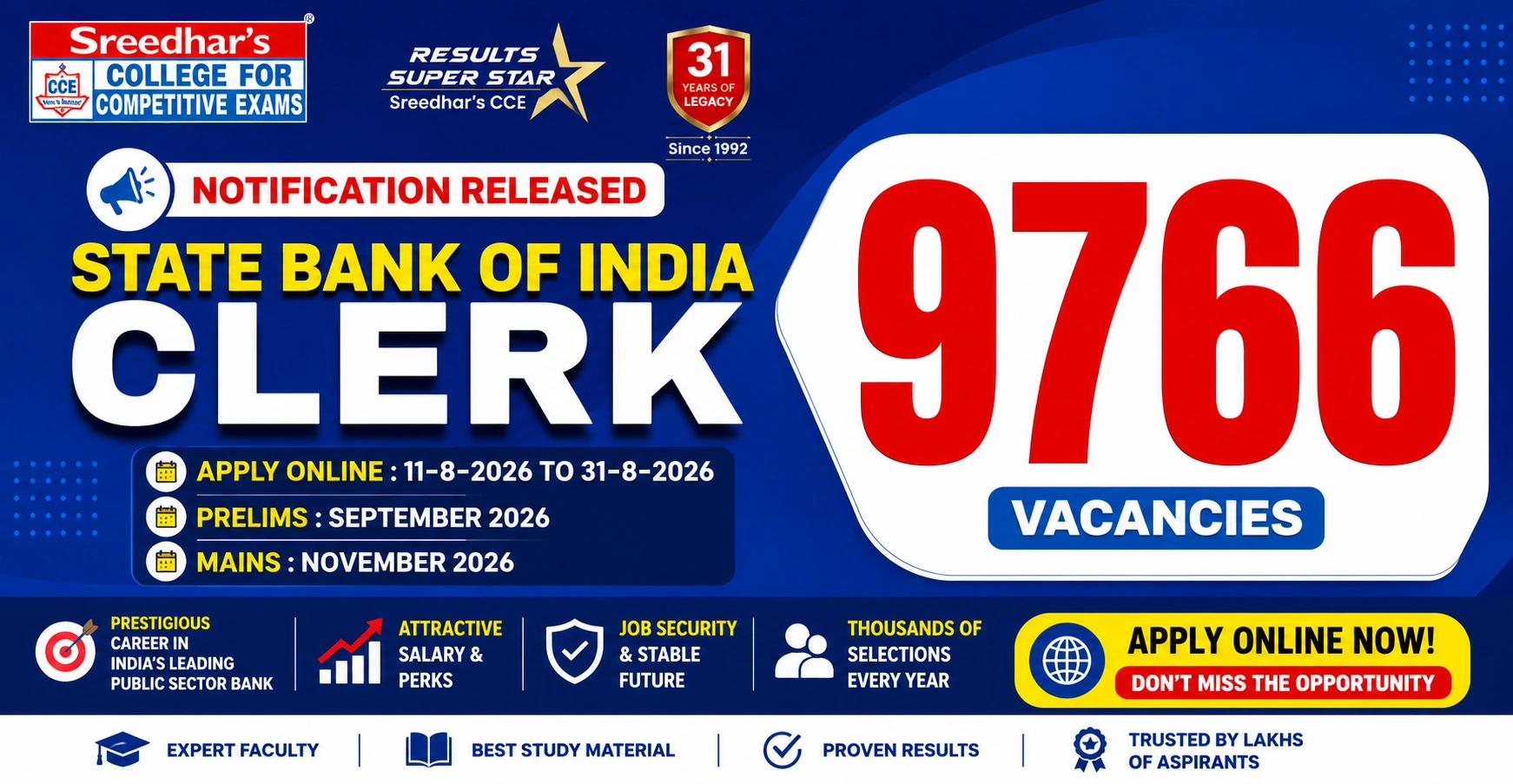
The SBI Clerk exam recruits Junior Associates for customer support and sales roles at SBI's thousands of branches. In recent years, SBI Clerk has seen significant fluctuation in vacancies: 14,191 posts were announced in 2024, followed by 6,589 in 2025, making it critical for aspirants to stay updated on each year's notification.
Unlike the PO exam, SBI Clerk has only two stages: Preliminary and Mains. There is no interview round. The exam tests Reasoning Ability, Quantitative Aptitude, English Language, and General/Financial Awareness. Eligibility is graduation in any stream with the age limit of 20-28 years. This exam is especially popular among candidates who want to enter the banking sector quickly without the complexity of an interview process.
3. IBPS PO (Probationary Officer / Management Trainee)
The IBPS PO exam is conducted by IBPS to recruit Probationary Officers and Management Trainees for participating public sector banks including Bank of Baroda, Canara Bank, Punjab National Bank, Union Bank of India, Indian Bank, and several others. In 2025, IBPS announced 5,208 vacancies under the CRP-PO/MT-XV recruitment cycle.
IBPS PO follows the same three-stage structure as SBI PO: Prelims, Mains, and Interview. The notification for the 2026 cycle is expected around early August 2026. As a Management Trainee, selected candidates rotate through different banking departments during a probation period of approximately two years before taking on a full managerial role.
The age limit is 20-30 years and educational qualification requires a graduation degree in any discipline.
4. IBPS Clerk
IBPS Clerk is the entry-level recruitment for clerical cadre positions in IBPS-participating banks. It is a two-stage exam (Prelims and Mains) with no interview, making it accessible to a wide range of aspirants. Candidates who clear both stages also undergo a Language Proficiency Test (LPT). Eligibility requires graduation with the age limit of 20-28 years.
The IBPS Clerk exam is an excellent starting point for first-time banking aspirants, as it shares most syllabus content with other banking exams, allowing candidates to prepare for multiple exams simultaneously.
5. IBPS SO (Specialist Officer)
IBPS SO recruits officers for domain-specific roles in participating banks. The posts include IT Officer, Marketing Officer, Law Officer, HR/Personnel Officer, Agricultural Field Officer, and Rajbhasha Adhikari. These are expert-level roles that require both domain knowledge and banking aptitude. Selection involves a Preliminary exam, Mains, and Interview.
The key distinction from PO and Clerk exams is that the Mains paper tests professional knowledge relevant to the specific post. For example, an IT Officer aspirant will face a paper on information technology, while a Law Officer candidate must demonstrate legal expertise. Eligibility is graduation in the relevant discipline, with the age limit of 20-30 years.
6. IBPS RRB PO and Clerk (Regional Rural Banks)
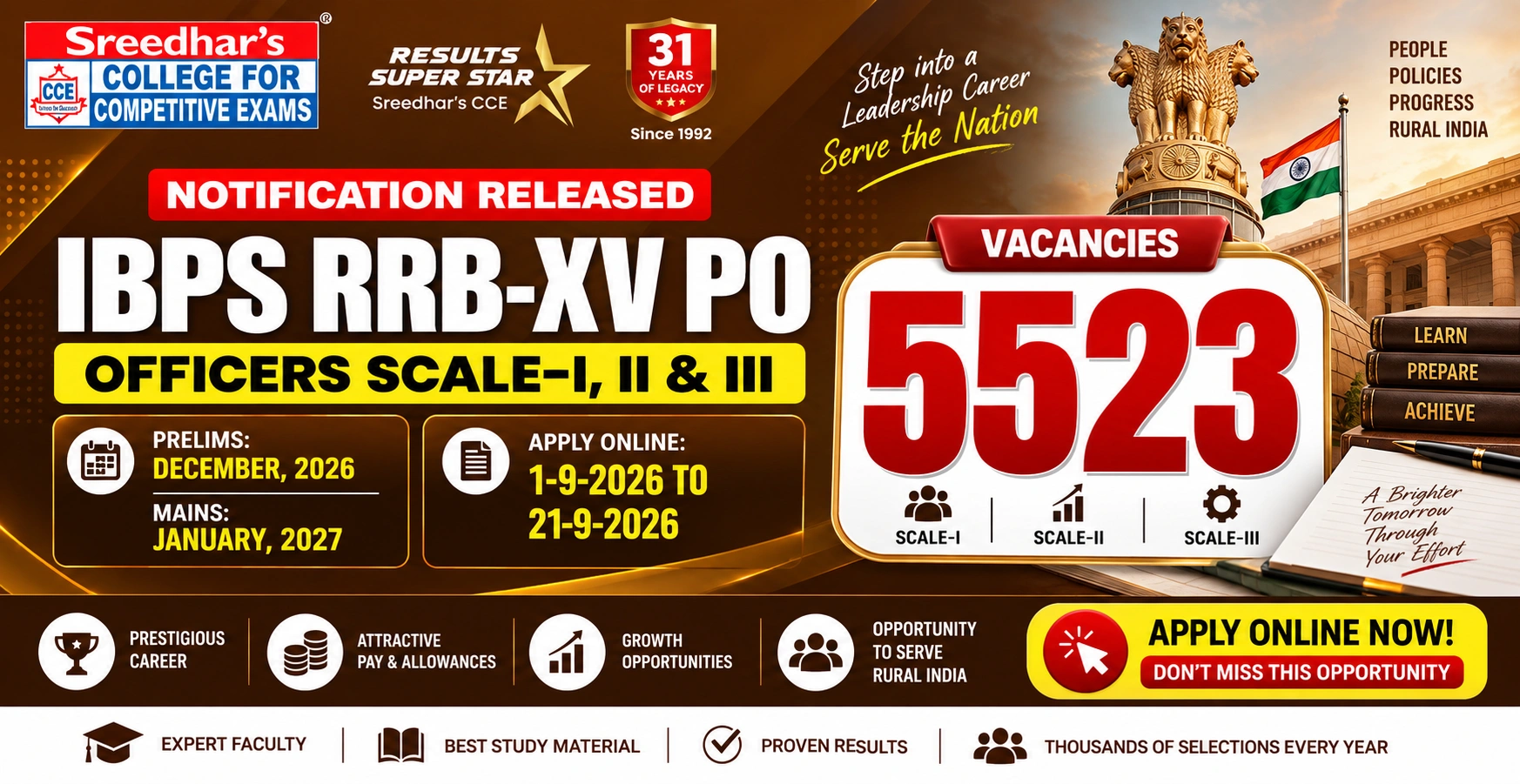
The IBPS RRB exam recruits officers and office assistants for India's Regional Rural Banks, institutions that play a vital role in rural credit delivery, agricultural lending, and financial inclusion. Two main posts are recruited: Officer Scale I (equivalent to PO) and Office Assistant (equivalent to Clerk). Higher officer scales (Scale II and Scale III) are also recruited through a single-stage exam.
IBPS RRB is particularly attractive because it does not require English as a compulsory subject in the exam. Candidates can opt for their regional language instead, making it highly popular in states like Telangana, Andhra Pradesh, Maharashtra, Tamil Nadu, and UP. The age limit for Officer Scale I is 18-30 years, and for Office Assistant it is 18-28 years.
The IBPS RRB 2026 exams are expected to follow the same calendar pattern as previous years, with notifications typically releasing mid-year.
7. RBI Grade B Officer
The RBI Grade B exam is arguably the most prestigious banking exam in the country. Conducted by the Reserve Bank of India, India's central bank and apex monetary authority, this exam recruits officers across three streams: General, DEPR (Department of Economic and Policy Research), and DSIM (Department of Statistics and Information Management). The RBI Grade B 2026 notification has already been released, announcing 60 vacancies for the current cycle.
The in-hand salary for an RBI Grade B officer starts at approximately Rs. 78,450 basic pay, with a revised gross of around Rs. 1,54,936 per month, one of the highest packages available at entry level in the government sector. The perks include accommodation, medical facilities, staff loans, and a learning-rich work environment focused on policy and regulation.
The selection involves three phases: Phase I (Objective), Phase II (Descriptive and Objective papers on Economics/Finance/Management), and Phase III (Interview). The eligibility criteria require graduation with at least 60% marks, and the age limit is 21-30 years. For candidates with experience at recognized financial institutions including NABARD, SIDBI, NHB, and EXIM Bank, age relaxation of up to three years is available.
8. RBI Assistant
RBI Assistant is a clerical-grade recruitment conducted by the Reserve Bank of India. While the role is entry-level, working in the RBI gives candidates exposure to India's monetary policy and regulatory framework from the ground up. The selection process involves a Preliminary exam, Mains, and a Language Proficiency Test. Age limit is 20-28 years and graduation is mandatory. The RBI Assistant Prelims Result for 2026 has recently been declared, indicating that the 2026 cycle is currently underway.
9. NABARD Grade A and Grade B
The National Bank for Agriculture and Rural Development (NABARD) recruits officers through its Grade A (Assistant Manager) and Grade B (Manager) exams. NABARD is an apex institution for rural and agricultural credit and plays a central role in rural development financing and policy in India.
NABARD Grade A recruitment typically covers streams including RDBS (Rural Development Banking Service), IT, Finance, Agriculture, Rural Development, and more. Eligibility requires a postgraduate degree or graduation in specific disciplines depending on the stream, with the age limit being 21-30 years for Grade A and 21-35 years for Grade B. The selection process involves a three-phase structure: Phase I (Preliminary), Phase II (Mains), and Phase III (Interview).
NABARD is considered a top-tier regulatory body exam alongside RBI Grade B and SEBI Grade A, ideal for aspirants with a background in economics, agriculture, rural management, or finance.
10. SIDBI Grade A and Grade B
The Small Industries Development Bank of India (SIDBI) conducts recruitment for Assistant Managers (Grade A) and Managers (Grade B) to support its mandate of promoting and financing small-scale industries and MSMEs across India. SIDBI Grade A is an attractive destination for candidates who combine strong general banking knowledge with an interest in development finance and MSME lending.
The eligibility for SIDBI Grade A requires graduation with at least 60% marks and the age limit of 21-28 years. The exam pattern generally mirrors that of other regulatory body exams with Phase I (Objective), Phase II (Descriptive), and Phase III (Interview).
11. SBI CBO, BOB LBO, and Other PSB Recruitments
Several public sector banks independently recruit for specific cadres beyond the IBPS framework. The SBI Circle-Based Officer (CBO) exam recruits experienced graduates for officer-level positions, requiring prior work experience in the banking or financial sector. The Bank of Baroda Local Bank Officer (LBO) exam similarly recruits candidates at the officer level for local area-specific roles.
Other notable individual PSB recruitments include Indian Bank PO, Bank of Maharashtra officer posts, Canara Bank specialist officers, PNB SO, and Union Bank SO. These are announced as and when the respective banks have vacancies, so aspirants must monitor official notifications regularly.
12. Insurance and Adjacent Financial Exams
A well-rounded banking aspirant should also be aware of exams conducted by insurance bodies that are closely related to banking recruitment preparation. These include LIC AAO (Life Insurance Corporation of India, Assistant Administrative Officer), NIACL AO and Assistant, GIC Assistant Manager, UIIC AO, and ECGC PO. These exams share significant syllabus overlap with banking exams and offer excellent career opportunities in India's public sector financial ecosystem.
Common Syllabus Across Banking Exams
Despite the variety of exams listed above, the core syllabus for most banking exams remains consistent. This is great news for aspirants preparing for multiple exams simultaneously. The major subjects tested are:
- Quantitative Aptitude: Number series, data interpretation, arithmetic, algebra, time-speed-distance, profit-loss, probability, and permutation-combination
- Reasoning Ability: Logical reasoning, puzzles, seating arrangements, syllogisms, coding-decoding, blood relations, and critical thinking
- English Language: Reading comprehension, grammar, vocabulary, error spotting, sentence rearrangement, and cloze test
- General/Banking Awareness: Current affairs, banking and financial awareness, RBI policies, government schemes, economic news, and static GK
- Computer Knowledge: Basics of computers, MS Office, internet, networking, cyber security, tested mainly in IBPS and some SBI exams
For officer-level exams like RBI Grade B and NABARD Grade A, the Mains exam additionally tests subjects like Economic and Social Issues, Finance and Management, Agriculture and Rural Development, and English Descriptive Writing. IBPS has also announced minor weightage changes in its exam pattern from 2025 onward, making it important to check the latest pattern before starting preparation.
How to Prepare for Banking Exams: A Strategic Approach
Ideally, four to six months of dedicated preparation is sufficient for most banking exams like IBPS PO, IBPS Clerk, SBI PO, and SBI Clerk. However, for regulatory body exams like RBI Grade B or NABARD Grade A, a longer preparation window of 8-12 months is advisable given the additional depth of the Mains papers.
Key preparation strategies every banking aspirant should follow:
- Build conceptual clarity in Quant and Reasoning first. These are time-intensive sections where accuracy and speed are both critical.
- Read newspapers daily, such as The Hindu, The Economic Times, or Business Standard, to stay updated on current affairs and banking/economic news.
- Practice mock tests religiously. Aim for at least 3-5 full-length mock tests per week in the months leading up to the exam and analyse every mock for weak areas.
- Follow official notifications closely. IBPS and SBI release their exam calendars at the beginning of each year, so plan your preparation to peak at the right time.
- Use previous year question papers. They offer the best insight into actual difficulty levels and frequently repeated topic patterns.
- For RBI Grade B and NABARD Grade A, build a strong foundation in Macroeconomics, Monetary Policy, Government Budgeting, and India's Agricultural Credit system.
Expected Banking Exam Calendar: 2026
Here is an overview of the expected exam schedule for major banking recruitments in 2026:
| Exam | Expected Notification | Expected Exam |
|---|---|---|
| SBI PO 2026 | June 2026 | July-August 2026 |
| SBI Clerk 2026 | Second half of 2026 | TBA |
| RBI Grade B 2026 | Released (60 vacancies) | Underway |
| RBI Assistant 2026 | Completed | Mains soon |
| IBPS PO 2026 | August 2026 | October 2026 |
| IBPS Clerk 2026 | Mid-2026 | Nov-Dec 2026 (Prelims), Jan 2027 (Mains) |
| IBPS RRB PO 2026 | Mid-2026 | November 2026 (Prelims), December 2026 (Mains) |
| IBPS RRB Clerk 2026 | Mid-2026 | December 2026 (Prelims), January 2027 (Mains) |
| IBPS RRB Scale II and III | Mid-2026 | December 2026 |
| NABARD Grade A/B 2026 | Mid-2026 | TBA |
| SIDBI Grade A/B 2026 | Second half of 2026 | TBA |
Note: All dates are tentative and based on historical trends. Candidates must check official websites of respective recruiting bodies for confirmed notifications.
A Note for Aspirants from Telangana and Andhra Pradesh
Aspirants from Telangana and Andhra Pradesh are among the most active participants in banking examinations nationally. The region has a strong tradition of competitive exam preparation, and cities like Hyderabad, Vijayawada, Warangal, and Tirupati have well-established coaching ecosystems.
A few specific advantages for aspirants from the Telugu states: IBPS RRB exams allow Telugu as a medium of examination, which gives regional candidates a natural advantage. Additionally, vacancies in RRBs are state-specific, meaning students from Telangana compete primarily for seats in Telangana State-based RRBs like Telangana Grameena Bank and Deccan Grameena Bank. This significantly reduces competition compared to all-India exams.
Sreedhar's CCE has been a trusted guide for competitive exam aspirants across Telangana and Andhra Pradesh for years. For the latest notifications, free study materials, and expert guidance on banking exams, aspirants are encouraged to follow the Sreedhar's CCE platform regularly.
Conclusion: The Banking Sector Is Full of Opportunities
India's banking sector remains one of the most dynamic and opportunity-rich career spaces for graduates. From the prestigious corridors of the Reserve Bank of India to the grassroots impact of Regional Rural Banks, every exam in this ecosystem offers a meaningful, well-compensated, and socially respected career path.
The competition is fierce. With consolidation of public sector banks, the number of vacancies in some years may be limited. But for the well-prepared aspirant, the rewards are worth every hour of study. Whether you are a fresh graduate targeting your first government job or a working professional looking to make a career switch into banking, there is an exam on this list designed for you.
Start early. Prepare smartly. Stay consistent. And keep checking Sreedhar's CCE for the latest updates, mock tests, and expert strategies to guide you all the way to your banking dream.
Leave a Comment
Required fields are marked *